On 17th November 2024, members voted to dissolve the Women’s Equality Party (WEP). The party’s strongest attribute was also its most overlooked, and British politics started 2025 worse off without it.
December 8th, 2016. I went on a radio assignment to interview the brand new Women’s Equality Party (WEP). As a London cab drove me underneath a heavy metallic sky, the sound from the radio buzzed with a reporter’s excitement: ‘Sir Mick Jagger has become a father again at the age of 73’. ‘But aren’t women usually criticised for pursuing parenthood later on?’ replied my internal monologue. Before posing my first question to the Women’s Equality Party, I was convinced of its need.
When I cosily delved into conversation with its media representatives, high-pitched electrics humming in a toasty office, the party was under two years old. But brimming with ideas.
For example, a ban on driving heavy load vehicles at peak hours, circumstances under which women are more likely to be killed. (Which raises the question, ‘If it causes that many deaths, why is it permitted at all?’) The party also backed a ‘rethink’ of Britain’s economy: diverting funding away from male-dominated construction so that the unpaid caregiver role may become paid work. The resultant ‘caring economy’ would support women with dependants by recognising their duties as a valid job, not some unfortunate ‘girl’s situation’ to break free of.
If you thought the party sought to implement its own policies by getting elected to office, that’s not strictly true.
As my tights tingled over a burning office chair, my interviewees underscored a most vital point I’ve never heard any media repeat: the Women’s Equality Party was non-partisan. It aimed to implement its policies by improving dialogue between the major parties. Yet, whenever the WEP was reported on, this fundamental aspect was never mentioned. In early December 2024, I googled ‘Women’s Equality Party non-partisan’. On the first page of results, the party’s own website (no longer live) was the only match stating the party’s commitment to non-partisanship.
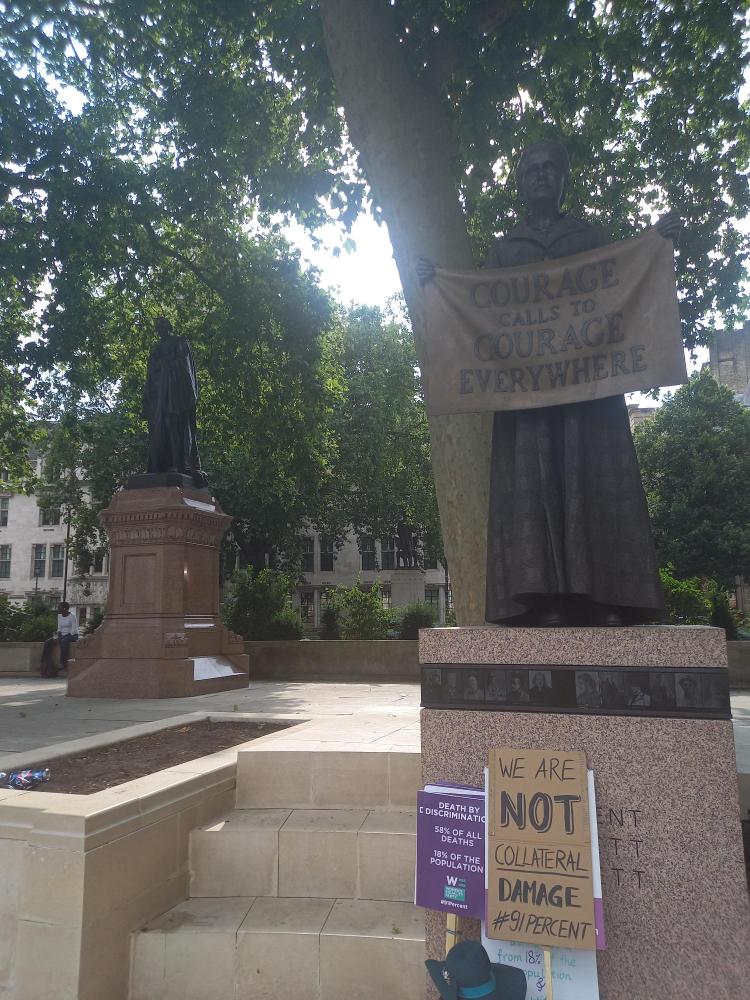
surrounded by remnants from a WEP protest. It symbolises tiredness and will to continue.
This founding principle was perhaps emphasised during our radio interview because the party was so new, its cornerstones fresh in the mind. It was a time when women were outnumbered in British politics 2:1. The WEP had identified an unhelpful, ‘highly combative’ approach to politics in the Westminster Parliament. The House’s layout alone -Leftists opposite Rightists- produces a hostile, confrontational atmosphere with no space to mediate. Without finding common ground, we go round in a cycle -alternating between policy a and policy b. The same problems persist, with people falling through the same gaps year on year.
The WEP saw women’s voices as a means of finding some common ground, or at least mediation space. A bridge between the two sides of the House. To break free of an echo chamber, you need an injection of fresh ideas: the precise perspectives that women could offer. This often-overlooked group harbours solutions that have long gone unheard. When the world is unfairly stacked against you, identifying the shortcomings and how to plug the gaps becomes second nature. WEP ‘[was] all about’ the ‘hang on, you might have a point’ approach that could only serve women better.
So dedicated to cross-party discussion was the WEP, it made history as the first UK party to host representatives from all major parties at its conference. This was huge, but never big news, such was the failure to report on its non-partisan status amid a tribal approach to politics. During this landmark conference, ‘there was lots of agreement about specific, gendered policies’ across political divides. Normally, this would tempt the host party towards stealing votes and candidates. But not the WEP. It remained ‘the only party that want[ed] to put itself out of business’ (unfortunate phrase in retrospect) and scattered seeds of women’s visibility across the male-dominated parties.
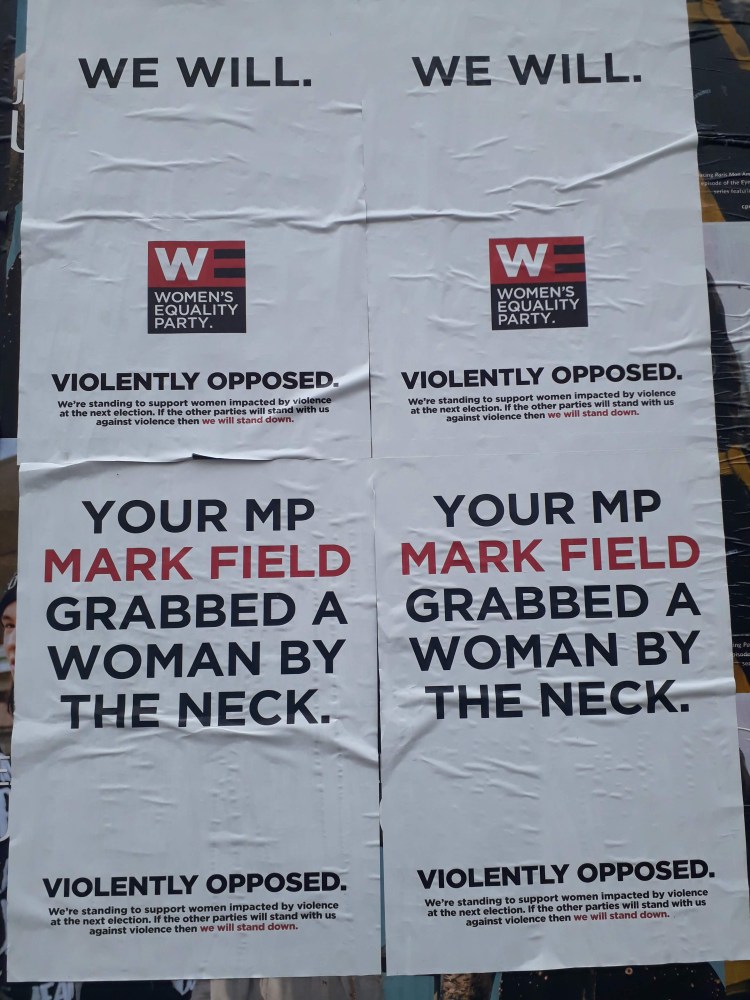
As a mouthpiece for cross-party discussion, the WEP could not be more needed in the age of social media. Users tend to share articles that conform to their own opinion, meaning that news outlets print already-established viewpoints that will be posted online and shared many times over, thus becoming deeper and deeper engrained. The space for platforming alternative ideas and approaches is already severely diminished. Once you have AI in this equation, the problem can only, well, take on a life of its own.
In the years since the WEP was founded, the Westminster Parliament became 40% female, an ‘all-time high’. A new law means any MPs found guilty of abuse or harassment can be dismissed. WEP activists successfully campaigned for access to at-home abortion to continue, and even hit supermarket shelves with stickers demanding a price cap on necessities. No, I didn’t think you knew, either. Such were the failures in framing and reporting on the UK’s most misunderstood political party.
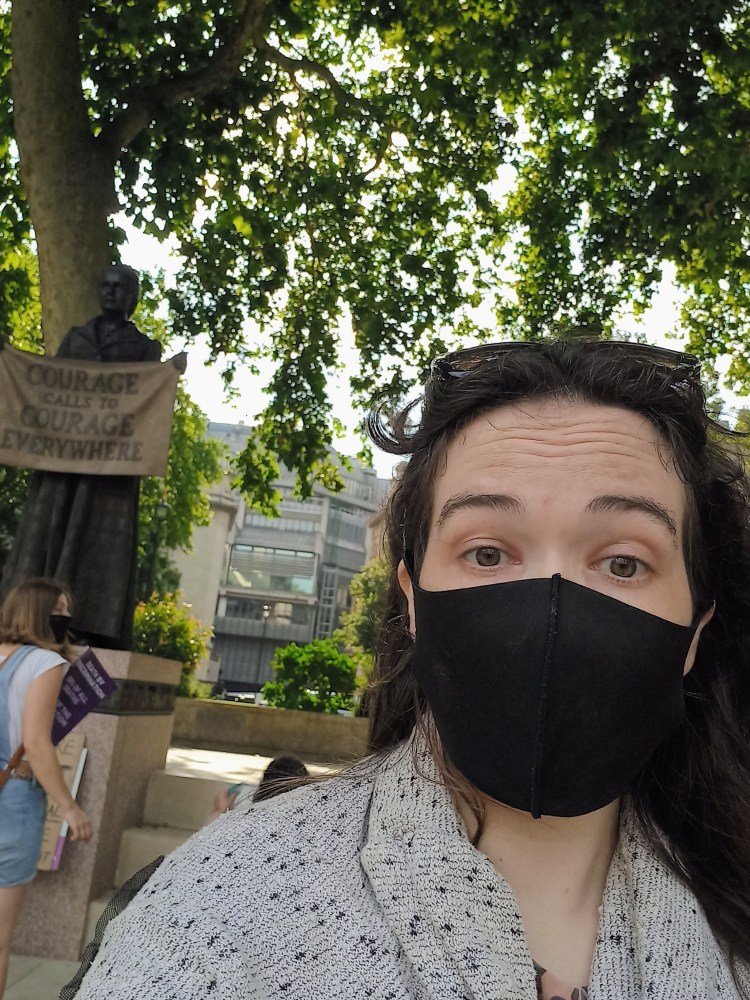
The United Kingdom is now without its female ‘steering committee for Westminster’, a pet name Yours Truly came up with, and one the party genuinely liked. Many voters bemoan that Keir Starmer won an election with ‘three million fewer votes than Corbyn’. Such is the First Past The Post system. The sad thing is, the UK had a body that was dedicated to amplifying unheard viewpoints. And we didn’t even know it. Back into the echo chamber we will go. Go. Go. Go.
 Rosie MacLeod